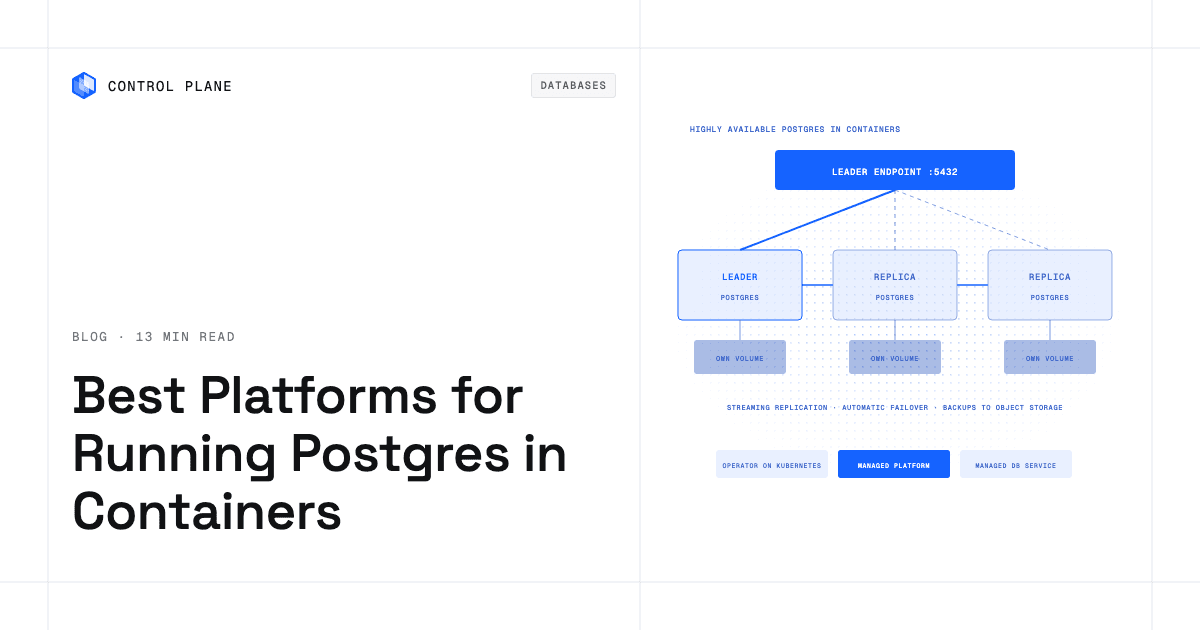
The best platforms for running Postgres in containers, compared on who operates the cluster, how failover works, backups, and multi-region options.
Blog
From the Control Plane blog
Cloud-native engineering, multi-cloud strategy, and platform deep-dives.
All posts
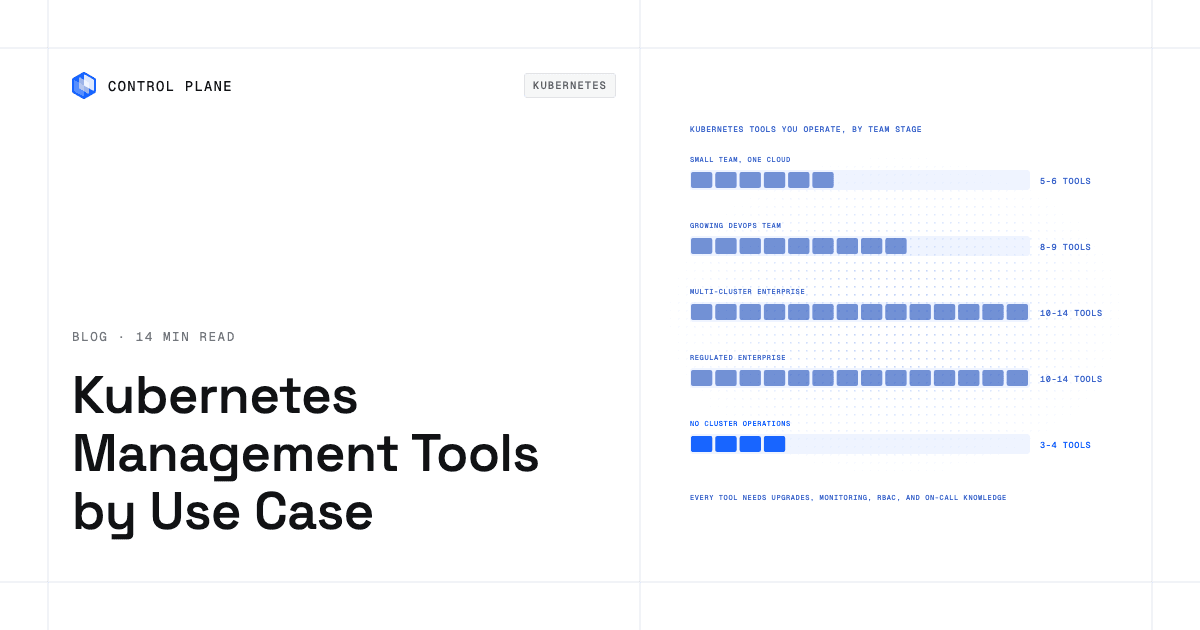
Kubernetes management tools by use case and team stage: CLI, GUIs, fleet management, GitOps, observability, policy, cost, and backup, with tools counted.
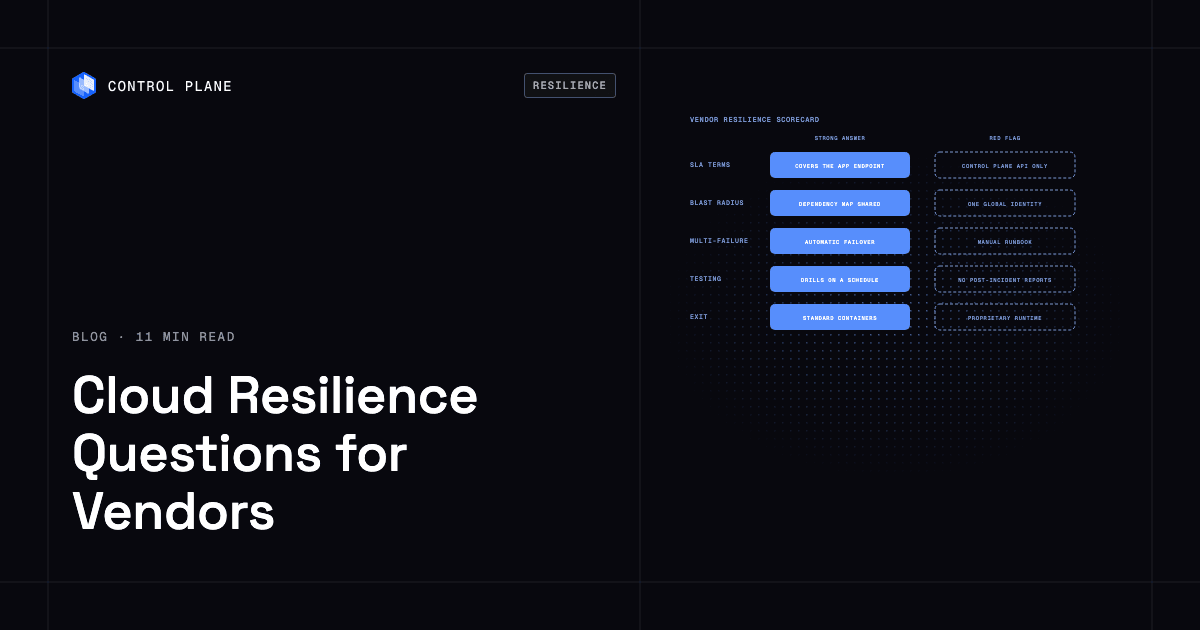
Cloud resilience questions CIOs should ask vendors, with a scorecard of strong answers and red flags for SLAs, blast radius, failover, testing, and exit.
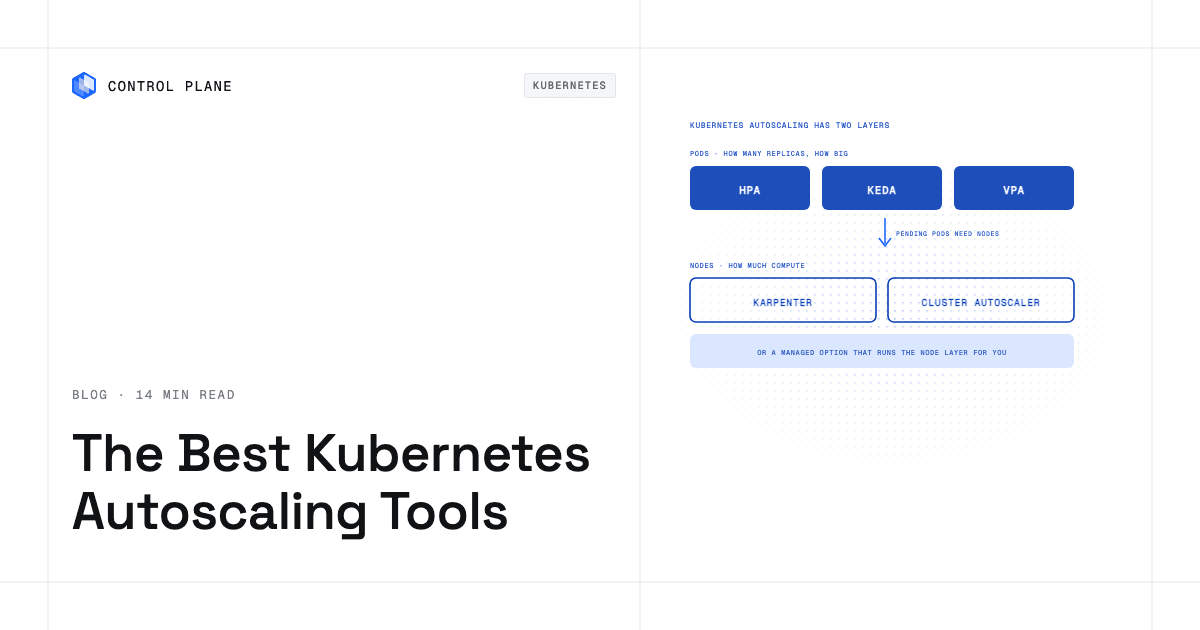
Kubernetes autoscaling tools compared: HPA, VPA, KEDA, Karpenter, Cluster Autoscaler, EKS Auto Mode, and GKE Autopilot, plus the best EC2 setup.
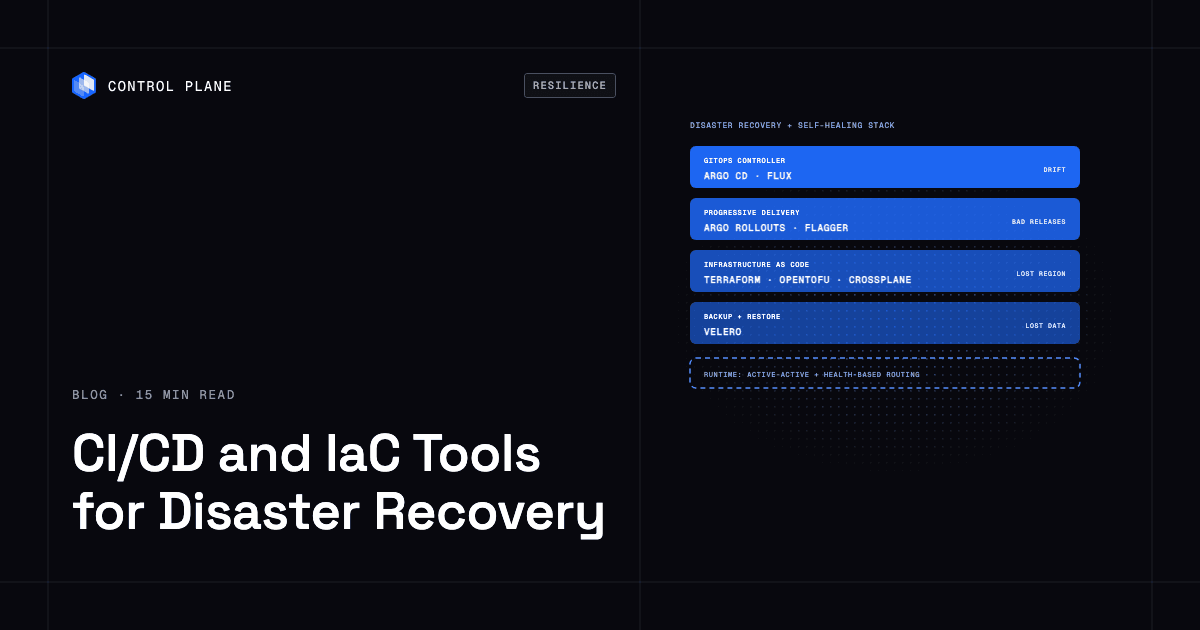
Which CI/CD and IaC tools cover disaster recovery and self-healing: Argo CD, Flux, Argo Rollouts, Flagger, Terraform, Crossplane, Velero, compared.
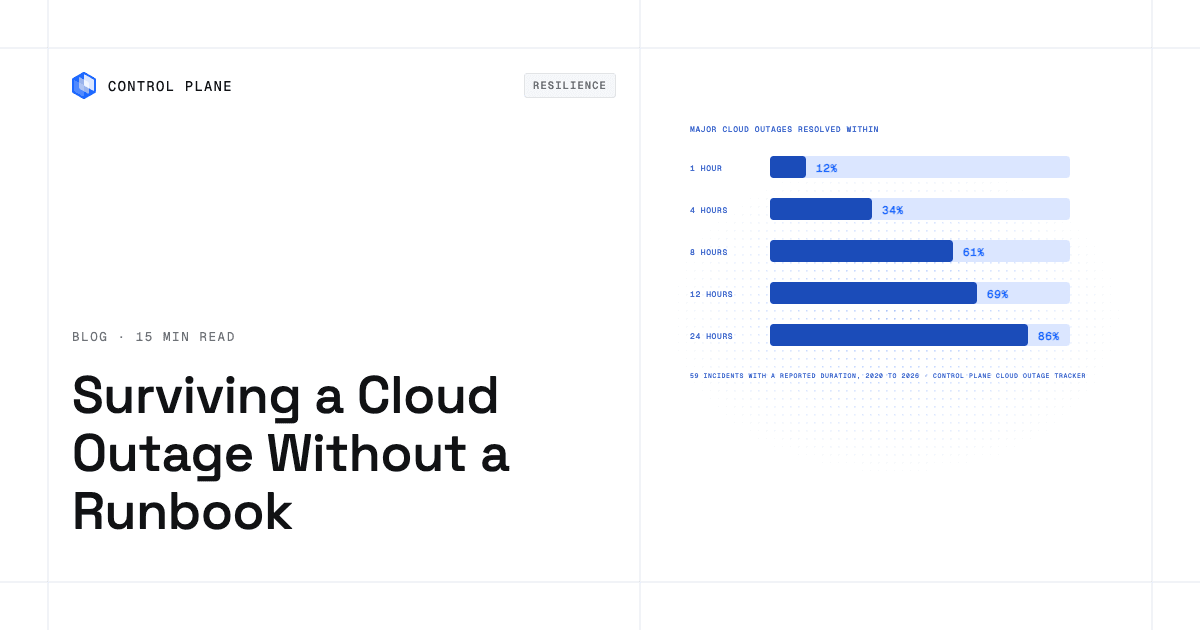
Survive a full cloud provider outage without a DR runbook: first 15 minutes, hour-by-hour plan, and outage data on when to wait or fail over.
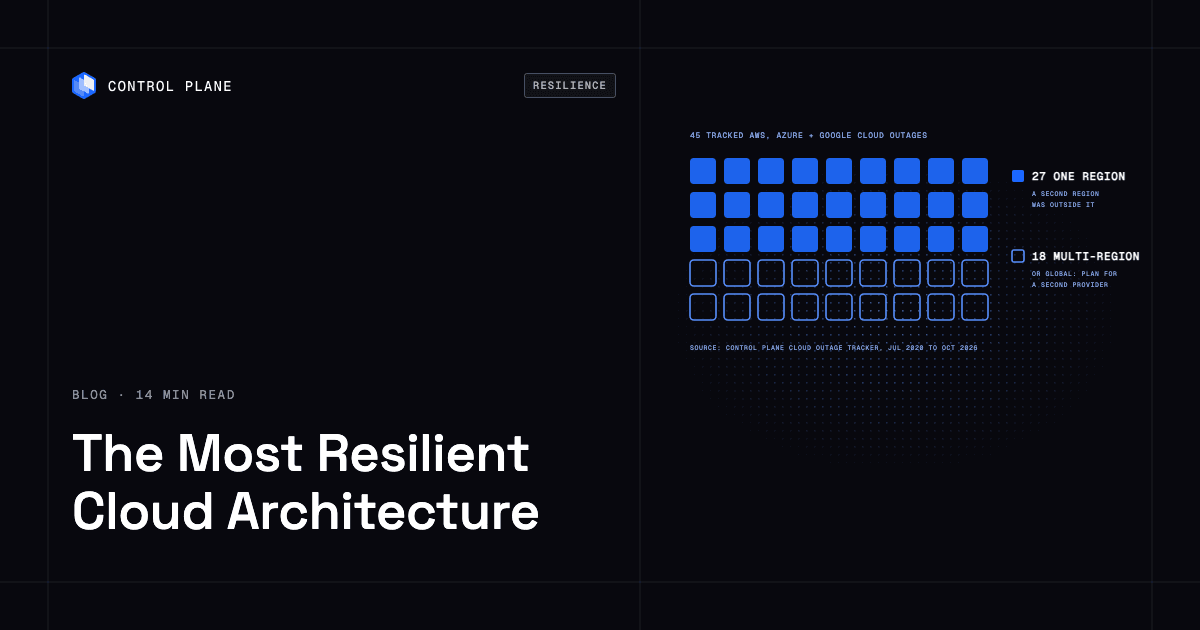
The most resilient cloud architecture is active-active across regions or clouds. Seven models compared, with outage data showing which ones survive.
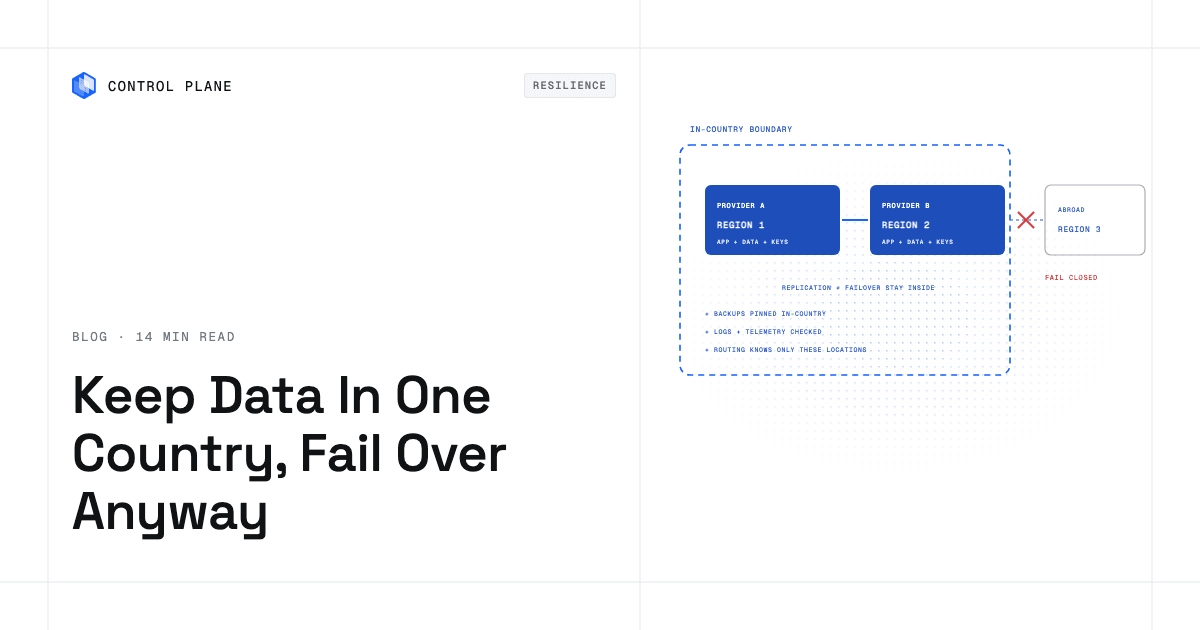
Keep customer data in one country with multi-region failover: in-country cloud regions by country, replication rules, and where data leaks during failover.
Self-host WordPress on Control Plane with bundled MariaDB, a shared media volume, optional daily S3 or GCS database dumps, and the admin login set at boot.
Self-host Plane, the open-source Jira alternative, on Control Plane: one install with Postgres, Redis and RabbitMQ, closed to the internet until opened.
Self-host Langflow on Control Plane: three secrets, one install. Bundled PostgreSQL, login required, optional S3/GCS backups and up to four replicas.
Self-host Documenso on Control Plane: sign PDFs with your own certificate, keep keys in secrets, and add HA PostgreSQL, SMTP and S3 backups.