An internal developer platform (IDP) is a self-service layer that combines infrastructure, deployment workflows, security controls, and developer tooling into standardized golden paths. It lets developers provision environments and ship applications without needing to understand every underlying system.
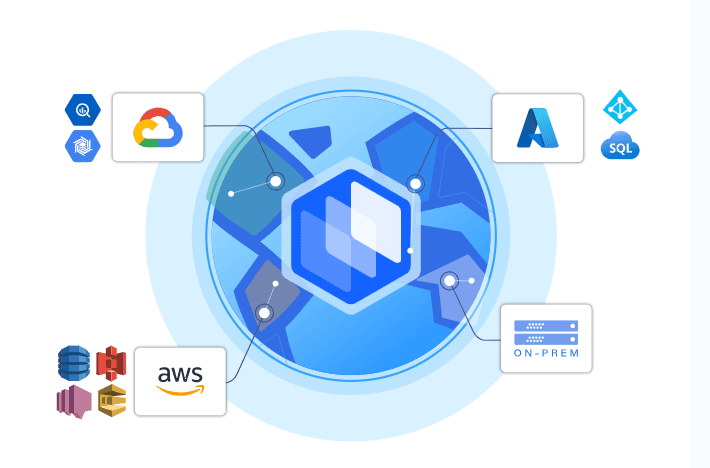
For organizations operating across multiple clouds or private infrastructure, the platform can also abstract provider-specific deployment and networking complexity.
Flexera’s 2026 State of the Cloud Report found that 89% of surveyed organizations used a multi-cloud strategy. When each cloud provider ships its own tooling and interfaces, that fragmentation slows development, increases error rates, and makes it harder for teams to move quickly. IDPs reduce that fragmentation by providing standardized workflows and a single control surface across deployment targets.
What is an Internal Developer Platform?
An Internal Developer Platform (IDP) is a product that a platform engineering team builds or adopts to give developers self-service access to the infrastructure, tools, and workflows they need. Instead of filing tickets or learning provider-specific interfaces, developers follow standardized golden paths that encode organizational best practices for provisioning, deployment, security, and observability.
The result is faster software delivery, fewer configuration errors, and lower operational overhead.
One distinction worth making early: an Internal Developer Portal is a UI layer or catalog that surfaces tools, documentation, and service ownership. An Internal Developer Platform is the broader system that provisions infrastructure, runs deployments, and orchestrates the full software delivery lifecycle. A portal is typically the front door to the platform; the platform includes the workflows, APIs, control planes, and infrastructure capabilities that fulfill developer requests. Many teams searching for a “portal” actually need the broader capabilities of a platform.
What Problems Do Internal Developer Platforms Solve?
IDPs address several critical challenges in modern application development and deployment, including ticket-based provisioning, fragmented tooling, inconsistent security controls, and rising cloud costs.
Ticket-Based Provisioning and Slow Onboarding
Without an IDP, developers depend on operations teams to provision environments, configure access, and set up deployment pipelines. This creates bottlenecks. New team members wait days or weeks to become productive.
- IDPs provide self-service workflows that let developers provision what they need without filing tickets.
- Standardized golden paths reduce onboarding time by encoding approved configurations into reusable templates.
Cost Reduction
Resource overprovisioning, idle environments, and inconsistent workload configurations can increase both cloud spend and the operational effort required to control it.
- Standardized provisioning and deployment workflows reduce manual configuration and operational toil.
- Reusable environment templates help teams apply consistent resource limits and lifecycle policies.
- Some platforms also include runtime cost optimization. Control Plane’s pricing page notes that organizations need fewer cloud resources because the platform continuously right-sizes container CPU and memory allocations, reducing infrastructure spend.
Quick Time to Market
Waiting to hire specialized engineers who are expensive and difficult to recruit slows your time to market and limits your ability to scale. Maintaining proprietary IDPs pulls resources away from feature development and introduces bottlenecks in the software development lifecycle.
- IDPs standardize deployment workflows across container orchestration systems like Kubernetes, reducing the per-team configuration effort and speeding up application delivery.
- The efficiency of IDPs allows companies to release new features or products faster, gaining a competitive edge.
High Availability and Low Latency
Cloud applications remain vulnerable to failures across regions, availability zones, clusters, and external dependencies unless they are designed with redundancy across multiple failure domains. Users located far from the available application instances may also experience higher latency.
Some platforms integrate runtime capabilities such as multi-region scheduling, health-based routing, and automated failover. These are implementation-specific capabilities rather than universal properties of every IDP.
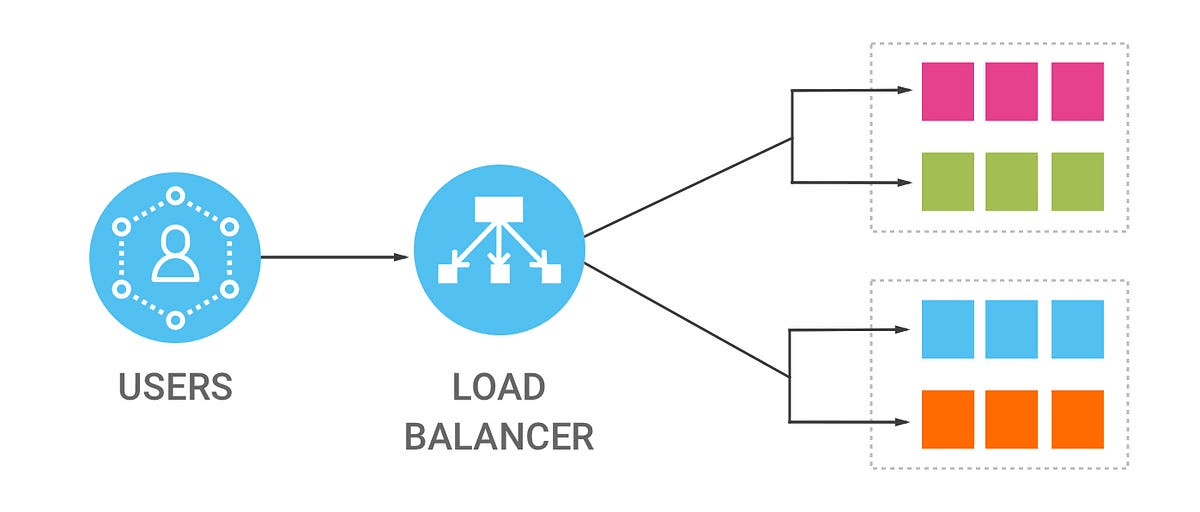
- When combined with a runtime orchestration layer, IDPs can distribute application loads across multiple servers or regions through load balancing and resource management.
- Control Plane offers a 99.999% compute availability SLA when workloads are deployed with at least two replicas across at least two locations.
Security and Compliance
Developers should not need to understand and manually configure every security control involved in deploying an application. Inconsistent manual configuration can introduce security gaps, especially across complex Kubernetes and multi-cloud environments.
- IDPs can integrate source-control protections, security scanning, policy engines, identity controls, and audit logging into approved delivery workflows.
- These controls can support an organization’s PCI DSS or SOC 2 program, although platform adoption alone does not establish compliance.
Tool Fragmentation and Multi-Cloud Complexity
Although EKS, AKS, and GKE expose the standard Kubernetes API, they differ in how teams provision clusters, configure identity and networking, perform upgrades, and integrate observability services. These differences increase the operational effort required to maintain consistent workflows or move workloads between providers.
- IDPs standardize how teams interact with different providers and tools, reducing the per-provider learning curve and configuration effort.
- By abstracting provider-specific interfaces behind a common workflow layer, IDPs make it more practical to adopt services from multiple providers or change providers over time without re-engineering deployment pipelines.
What Are the Key Features of an Internal Developer Platform?
The most capable IDPs share four foundational feature sets that together define the developer experience: tool integration, infrastructure management, self-service capabilities, and governance controls.
Integration With Existing Tools
IDPs connect with the version control and CI/CD systems engineering teams already use, rather than replacing them.
- Integrate with tools like GitHub, GitLab, and CI/CD pipelines.
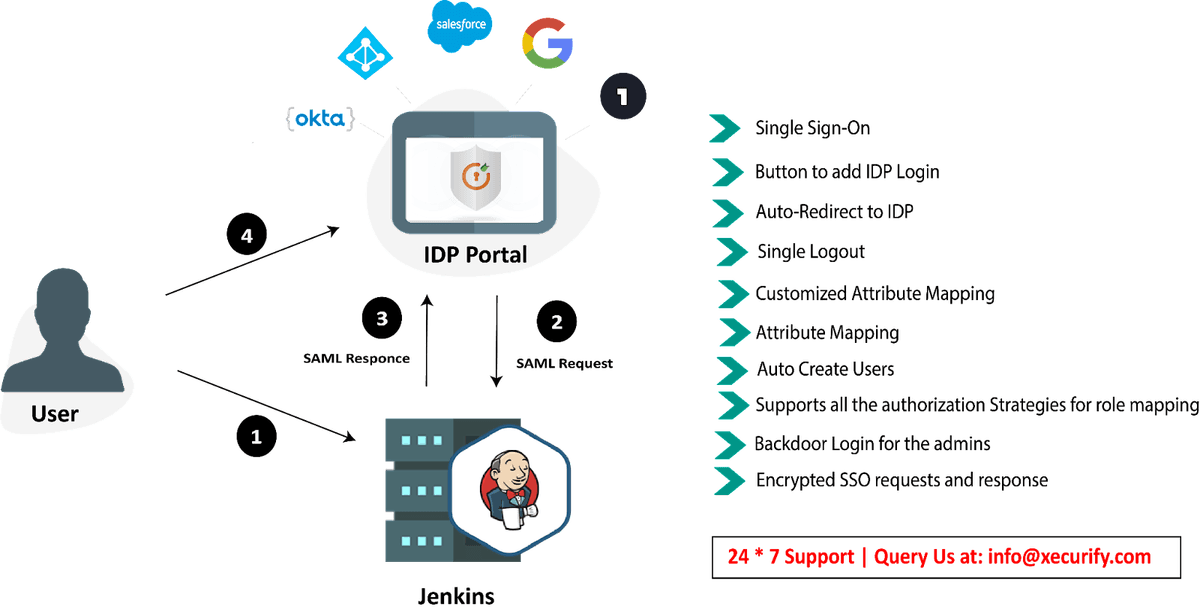
- IDPs can automatically trigger a deployment process in Jenkins or CircleCI when a developer pushes code to a Git repository.
Application and Infrastructure Management
Many IDPs adopt GitOps practices for application and infrastructure changes, treating Git as the single source of truth for cluster and environment state, though this is one approach among several.
- Integrating Terraform for infrastructure as code (IaC) into the IDP simplifies updates and rollbacks.
Developer Self-Service Capabilities
Self-service is the feature that most directly reduces platform team toil. Developers provision what they need without waiting on tickets.
- IDPs give developers self-service access to tools, resources, and services through user-friendly interfaces.
- Workflows that reduce friction ease onboarding for new employees and foster collaboration within teams.
Collaboration and Governance Features
Governance controls let different roles operate independently while preserving security and auditability across the entire organization.
- IDPs can standardize and enforce access policies by integrating role-based access controls across platform components, giving developers, QA testers, and operations teams appropriate permissions.
- Connect tools like Splunk or ELK stack to collect audit trails and logs, maintaining transparency, accountability, and compliance throughout development.
What Layers Make Up an Internal Developer Platform?
An IDP is not a single tool. It is assembled from several layers, each serving a distinct role. Most mature setups combine tools from several layers rather than relying on a single product.
Developer portal and service catalog: Backstage, a CNCF project originally created by Spotify, provides a framework for building developer portals with service discovery, documentation, ownership tracking, and scaffolding via Software Templates. It typically serves as the front door to the broader platform.
Platform orchestration and control plane: This layer translates application requests into environment, infrastructure, network, and policy configurations. Control Plane operates in this layer, tying together compute, networking, identity, and observability across clouds and regions through a single API.
Infrastructure provisioning: Terraform, Pulumi, and Crossplane define and provision infrastructure declaratively, which IDPs wire into automated deployment flows.
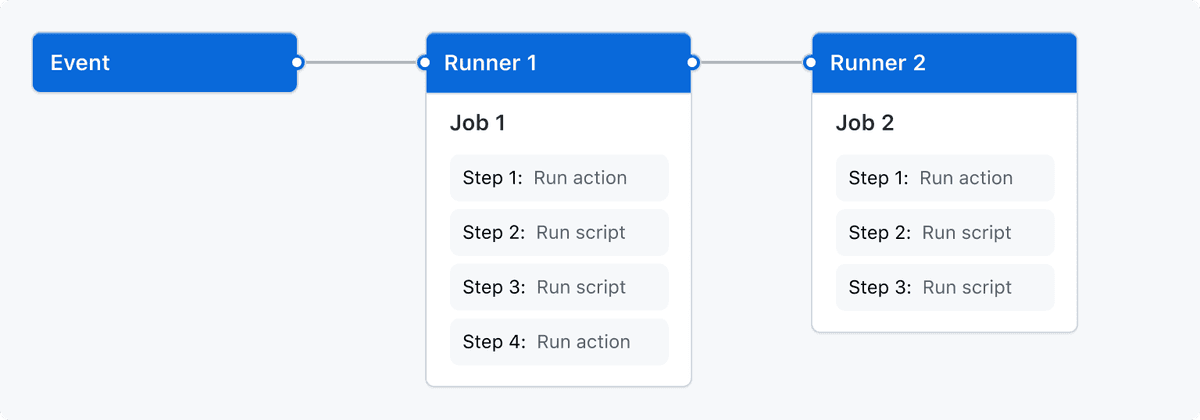
CI/CD and GitOps: GitHub Actions, Jenkins, Argo CD, and Flux handle build, test, and deployment pipelines. Argo CD and Flux continuously reconcile Kubernetes environments against the desired state declared in Git.
Policy, identity, and observability: Identity management, secrets handling, policy enforcement, audit logging, and observability tools support secure operations across the platform.
None of these tools is an IDP on its own. GitHub Actions is a CI/CD platform. Argo CD is a GitOps delivery tool. Backstage is a portal framework. They become an IDP when assembled into a coherent product experience with golden paths that developers can follow.
A Practical Golden Path Example
A golden path is a pre-built, opinionated workflow that encodes best practices. Instead of showing isolated YAML snippets, here is what an end-to-end golden path looks like when a developer creates a new production API:
- The developer selects “Create Production API” from the platform’s self-service catalog.
- The platform creates a repository from an approved template, complete with application scaffolding, CI/CD pipeline definitions, and deployment manifests.
- Infrastructure provisioning runs automatically: compute, networking, and storage are configured according to organizational standards.
- Identity, secrets, and network policies are applied based on the workload’s classification.
- A preview environment is provisioned for testing before production deployment.
- Ownership and documentation are registered in the service catalog.
The developer focuses on application code. The platform automates the standardized provisioning, security, and delivery steps. This is what self-service looks like in practice.
How Should You Build or Adopt an IDP?
There are several approaches to building or adopting an IDP. The right model depends on your team’s size, existing infrastructure, and tolerance for ongoing platform engineering work.
Assemble from Open-Source Components
Open-source tools like Backstage, Argo CD, Terraform, and Crossplane can be assembled into a platform. This gives you full control and avoids licensing costs, but requires significant integration effort and ongoing maintenance.
- Community support and documentation are available.
- No licensing fees.
- Integration and customization require dedicated platform engineering effort.
- Keeping components compatible across upgrades adds operational burden.
Build a Custom Platform
Building a bespoke IDP is usually easier to justify when an organization has a dedicated platform team, highly specialized workflows, and enough scale to absorb the ongoing maintenance cost. Team size alone is not a sufficient decision criterion.
- Full customization to organizational requirements.
- Complete ownership and control.
- Requires significant investment of time, effort, and resources.
- Pulls engineering resources away from feature development.
Adopt a Commercial Platform
Commercial platforms such as Control Plane provide pre-built orchestration, deployment, identity, and networking capabilities across vendor-provided and customer-hosted infrastructure. They offer faster time to value but introduce vendor dependency.
Reliance on the vendor’s product roadmap and support.
- Faster setup and deployment.
- Vendor-provided infrastructure reduces operational maintenance, while customer-hosted compute keeps more infrastructure responsibility within the organization.
- Customization may be more limited than a self-built solution.
Use a Hybrid Approach
Many teams use a hybrid model: adopt a commercial or open-source platform for the core orchestration layer, then build organization-specific golden paths, integrations, and developer tooling on top. This balances time to value with customization needs.
- Control Plane can serve as the orchestration and runtime layer while teams build custom portals, golden paths, and CI/CD integrations around it.
- Deploying workloads on customer-hosted infrastructure gives teams greater control over location, network boundaries, and operating environment, though the organization is responsible for maintaining the environment in line with its own compliance requirements.
- Control Plane enables secure developer self-service and helps optimize cloud costs.
A proof of concept on some commercial platforms can be running in days. A full production rollout, covering integrations, governance requirements, migration scope, and organizational adoption, typically takes weeks to months depending on complexity.
How Control Plane Can Power an Internal Developer Platform
Most organizations evaluating IDPs face the same trade-off: build something custom and spend months maintaining it, or adopt a tool that covers most of your needs but creates new constraints. Control Plane is designed to close that gap.
Control Plane provides the workload orchestration, deployment, identity, networking, and observability layers that platform teams can use to deliver self-service golden paths across public clouds and private infrastructure. It gives you a single API and unified control plane across AWS, GCP, Azure, OCI, and private infrastructure. You can compose compute, networking, identity, and observability from any combination of providers without re-architecting as your needs change.
For teams building with AI, Control Plane includes an MCP server that gives agents a purpose-built interface to Control Plane resources instead of requiring them to work directly with the much broader APIs of individual hyperscalers.
You can begin deploying containerized applications in minutes and expand the setup across multiple clouds, regions, or customer-hosted infrastructure as your requirements grow.
Start building with Control Plane for free, or talk to an engineer about your platform architecture.
Frequently Asked Questions
An Internal Developer Portal is a UI layer, a catalog that surfaces tools, documentation, and service ownership information. An Internal Developer Platform is the broader system that provisions infrastructure, executes deployments, and manages the full software delivery lifecycle. A portal is typically the front door to a platform; the platform includes the workflows, APIs, control planes, and infrastructure capabilities that fulfill developer requests. Teams that search for a “portal” often discover they need the broader capabilities of a platform once they map their actual workflow requirements.
A proof of concept on some commercial platforms can be running in days. A full production rollout, covering integrations, governance requirements, migration scope, and organizational adoption, typically takes weeks to months depending on complexity. Open-source assembly typically falls somewhere in between.
Building a bespoke IDP is usually easier to justify when an organization has a dedicated platform team, highly specialized workflows, and enough scale to absorb the ongoing maintenance cost. Team size alone is not a sufficient decision criterion. Below a certain scale, the ongoing maintenance burden of a proprietary platform tends to outweigh the customization benefits.
IDPs can reduce operational costs through automation, standardized environments, and improved workflows that reduce manual toil and configuration drift. Platforms that include runtime optimization capabilities can further reduce infrastructure spend by right-sizing CPU and memory allocations and scaling environments down when idle.
A production-ready IDP should integrate zero trust network architecture, role-based access control (RBAC), encryption at rest and in transit, and policy enforcement capable of detecting or blocking misconfigured workloads before deployment. These controls can support compliance programs such as PCI DSS and SOC 2 Type 2, although platform adoption alone does not establish compliance.
An IDP does not eliminate lock-in on its own, but it can significantly reduce operational dependence on provider-specific interfaces. Developers interact with a single control surface regardless of which underlying provider is executing the workload. Teams may still depend on proprietary databases, managed services, or cloud-specific capabilities. Provider-independent orchestration layers like Control Plane can standardize workload deployment across public clouds and private infrastructure, making it more practical to distribute workloads or migrate between providers.
An IDP does not inherently provide high availability. HA depends on the infrastructure capabilities integrated into the platform. Some platforms include multi-region traffic distribution, health-based routing, and automated failover. When a server or availability zone fails, such a platform can reroute traffic automatically to healthy nodes, minimizing downtime. Control Plane offers a 99.999% compute availability SLA when workloads are deployed with at least two replicas across at least two locations.