It starts with a red-line directive from the Board. In the face of 2026’s volatile economy and rising interest rates, the mandate is clear: Reduce cloud spend by 20% by the end of Q1.
The numbers are staggering. Global end-user spending on public cloud services is projected to hit $947.3 billion this year, according to Business Wire, yet a massive portion of that is essentially incinerated. In fact, current research from Pelanor indicates that approximately 21% of enterprise cloud infrastructure spend is wasted on underutilized resources.
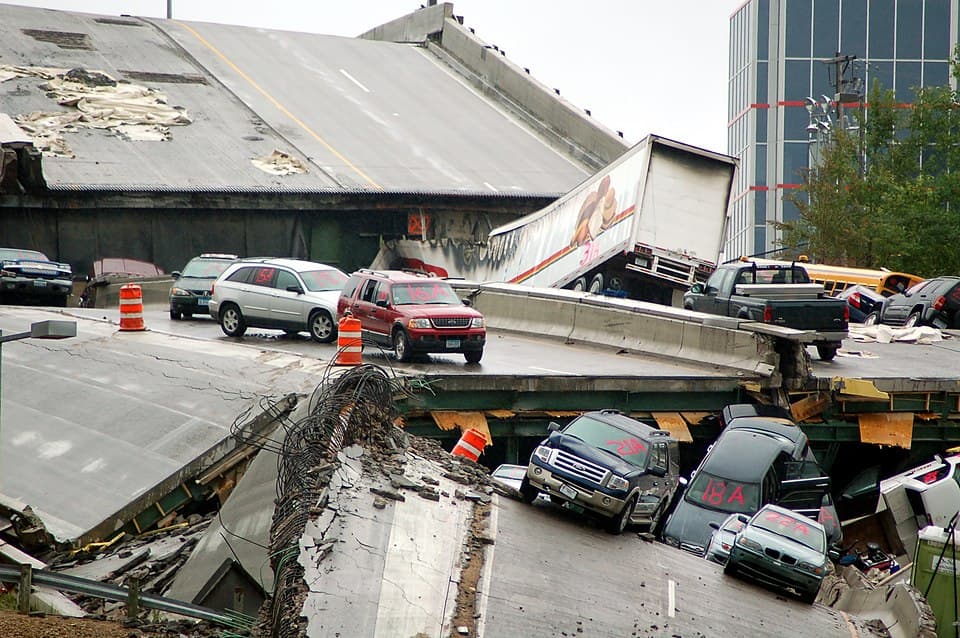
For most CTOs and Engineering VPs, the response is instinctive and reactive. They begin a process I call Infrastructure Atrophy. They delete logs “for now,” downsize production instances to leaner tiers, and pause the “non-essential” observability tools that provide the very visibility they need to survive.
But here is the hard truth for 2026: You cannot shrink your way to growth. Aggressive, uninformed cost-cutting is not a financial strategy; it is a product lobotomy. There is a fundamental difference between efficiency and deprivation. While we know 30% of the budget is essentially wasted, reckless cutting is a trap. When leadership forces a 20% cut without a strategy beyond “spending less,” they are inadvertently dismantling the product’s performance, reliability, and future scalability.
The High Price of Infrastructure Atrophy
Infrastructure Atrophy occurs when an organization cuts resources to a point where the system can no longer sustain health or innovation. While the spreadsheets might look leaner for a month, the silent failures begin immediately.
- The Latency-Churn Spiral – In 2026, user patience is a non-existent commodity. We are no longer just fighting for attention; we are fighting for milliseconds. According to data from a Deloitte study, a mere one-second delay in page load time can lead to a 7% reduction in conversions. Conversely, even a 0.1-second improvement in mobile load times can boost retail conversions by 8.4%. Starving your infrastructure creates a “performance tax” that drives customers directly into the arms of your competitors.
- The Visibility Crisis
To cut costs, teams often start by reducing data ingestion into observability platforms. This is the architectural equivalent of flying a plane in a storm and deciding to turn off the radar to save fuel.
A report by Anodot found that 54% of executives believe their primary source of cloud waste is a lack of visibility into cloud usage. If you stop measuring, you stop knowing where the waste actually is. You end up cutting the “muscle” (performant compute) while leaving the “fat” (orphaned snapshots and idle GPU clusters) untouched because you simply can’t see them anymore. - The Downtime Disaster
Aggressive cost-cutting often leads to under-provisioning, which makes systems brittle. In 2026, the cost of being wrong about your resource needs is higher than ever. BigPanda and ITIC report that the average cost of an unplanned IT outage for large enterprises has escalated to $23,750 per minute.
A single hour of downtime can cost a major brand over $1.4 million. If your “20% spend reduction” causes even one significant outage, you haven’t saved the company money; you’ve triggered a financial catastrophe that far outweighs any infrastructure savings.
The Architecture of Efficiency
If Infrastructure Atrophy is the disease, Granular Automation is the cure. In 2026, the goal isn’t to own less infrastructure; it’s to pay for exactly what you use, down to the millisecond and the millicore. This requires shifting away from fixed-capacity thinking toward a consumption-native architecture, utilizing several established industry methods.
- Implement Intelligent Workload Scheduling and Spot Markets
One of the fastest ways to hit a 20% reduction without changing a line of code is to optimize the market in which you buy compute. Research shows that companies are increasingly utilizing Spot Instances (and their equivalents, Spot VMs in Azure and Preemptible VMs in GCP), which can save between 70% and 90% compared to on-demand pricing.
The key is automation. Tools like CAST AI or CloudKeeper monitor your Kubernetes clusters in real-time, automatically moving workloads to the most cost-effective instances available. By using AI to handle the interruption risk of spot instances, you can maintain high availability while slashing the bill for non-critical services. - Adopt Millicore Pay-Per-Use and Scale-to-Zero
The traditional model of renting a virtual machine, where you pay for 100% of the capacity even if you’re using 5%, is the primary driver of cloud waste. Leading organizations are solving this by adopting a true consumption model.
Platforms like Control Plane represent this next level of maturity, allowing for millicore-level CPU allocation. Instead of provisioning a full node instance, you provision exactly the compute power your code requires at that specific second. Furthermore, this platform enables True Scale-to-Zero. When a service is not receiving traffic, it should consume zero resources and cost zero dollars. This Just-in-Time infrastructure approach ensures your budget is allocated to active user sessions, not idle servers, effectively deleting the idle tax from your balance sheet. - Automate Lifecycle and Storage Tiering
Storage is often the hidden killer of cloud margins, growing silently while compute gets all the attention. According to N2WS, over-provisioned storage and orphaned snapshots account for a massive chunk of wasted spend.
Instead of a manual “cleanup day,” engineering teams should implement automated Object Lifecycle Management (OLM). By setting policies that automatically move data from expensive S3 standard tiers to Glacier Deep Archive based on access frequency, you can reduce storage costs by up to 80% without losing compliance data. This ensures your logs remain available for 2026 security audits without costing production-level prices. - Leverage Multi-Cloud Utility Layers
89% of organizations have a multi-cloud strategy. However, true efficiency comes from treating these clouds as a single utility rather than separate silos.
By using an abstraction layer, whether through a Global Virtual Cloud like Control Plane or by utilizing cross-cloud management tools, you can dynamically shift workloads to the cloud provider that offers the best price-performance ratio at that specific hour. This level of cross-cloud elasticity turns infrastructure into a commodity, allowing you to chase the lowest prices globally without manual migration efforts or architectural rewrites.
Lead as Efficiency Architect, Not Budget Cutter
As we navigate the fiscal complexities of 2026, the role of the tech leader has shifted from Resource Provider to Efficiency Architect. The Board’s demand for a 20% reduction shouldn’t be viewed as a threat to your product’s health, but as a catalyst to purge the technical debt of static provisioning.
The traditional slash-and-burn method of cost-cutting fails because it assumes that infrastructure is a fixed pie. In reality, modern cloud-native platforms and automated tools have turned infrastructure into a liquid asset. Whether you are using AI-driven autoscalers, millicore-level consumption platforms like Control Plane, or automated storage tiering, you are building a system where costs finally track with revenue-generating activity.
The companies that will dominate the late 2020s are those that realized you can’t shrink your way to the top. You have to automate your way to the efficiency that makes growth sustainable. When you replace senseless austerity with the precision of granular automation, you solve the Board’s immediate problem without creating a future crisis.
The mandate for 2026 is not actually to spend less money; it is to stop wasting it. By adopting a consumption-native architecture, you transform the 20% cut from a painful sacrifice into a strategic cleanup. You prove that in a volatile economy, the most successful technical leaders aren’t the ones who starve their infrastructure; they are the ones who have mastered the art of wasting nothing.