

Cloud infrastructure is the bedrock of the modern enterprise, but it hides a dirty secret: much of it is running half-empty. Idle servers, overprovisioned clusters, and forgotten workloads keep data centers humming around the clock, burning through electricity and water while padding your monthly bills. For CTOs and CFOs juggling AI growth and tight margins, this waste isn’t just an ops headache; it’s a hidden drag on profitability and a growing regulatory exposure. “Idle” is fast becoming the most expensive word in your vocabulary.
The scale of this inefficiency is staggering. According to the Flexera 2025 State of the Cloud Report, an estimated 32% of cloud budgets are wasted annually, primarily due to overprovisioning and underutilized resources. For an enterprise spending $12 million a year, that is nearly $4 million evaporated into thin air, fueling a cycle of energy demand that delivers zero business value.
This waste is colliding with a global energy crisis. Wasted cloud expanse is a fiscal tax, but it’s also a carbon tax. As public cloud spending is projected to surpass $1.03 trillion in 2026, the environmental footprint of that spend is coming under microscopic scrutiny. While CTOs scramble to secure high-density AI clusters, the “idle tax” on existing workloads is burning through electricity and water at a rate that grids and ecosystems can no longer sustain.
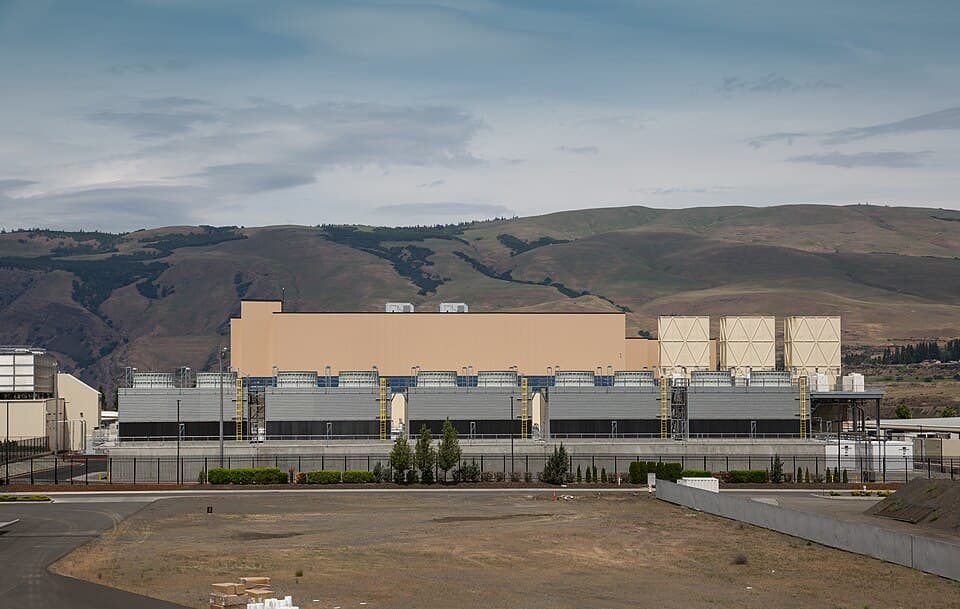
Google Datacenter – The Dalles, Oregon

The 2026 Reality: A Grid Under Pressure
Global data centers are no longer invisible utilities; they are the primary competitors for municipal resources. According to the International Energy Agency (IEA), data centers were responsible for approximately 415 Terawatt-hours (TWh) of electricity consumption in 2024, representing roughly 1.5% of worldwide demand.
The driver of this surge is the insatiable appetite of Large Language Models (LLMs). The IEA projects that this demand will more than double, reaching 945 TWh by 2030. This expansion is putting unprecedented pressure on power grids from Northern Virginia to Silicon Valley. In the PJM electricity market, which spans from Illinois to North Carolina, data center demand contributed to a $9.3 billion price increase in the 2025-26 capacity market, directly impacting regional utility rates.
The kicker isn’t just the growth; it’s the inefficiency. Public cloud CPU utilization remains stubbornly low, yet a server idling at minimal utilization still pulls 20-60% of peak power. When you scale this across an enterprise-grade Kubernetes deployment, you aren’t just wasting money; you are effectively subsidizing a global emissions machine.
Why CSRD is the New GDPR
The EU’s Corporate Sustainability Reporting Directive (CSRD) has been fully effective since 2024. Under the ESRS E1 (climate) standard, companies must report Scope 1, 2, and 3 emissions with the same rigor as financial earnings. For the CFO, the most dangerous area is Scope 3 Category 1: Purchased Goods and Services, which includes the footprint of your cloud providers. This covers data center electricity and water footprints, whether your workloads run on AWS US-East or Azure Ireland.
By 2029, nearly half of Fortune 500 firms with EU ties must comply, per PwC’s Global CSRD Survey, with IT leaders citing data granularity as the top hurdle. US CFOs take note: this isn’t Brussels bureaucracy; it’s a preview of SEC climate rules and California’s SB 253, where idle cloud waste shows up as unmitigated Scope 3 emissions, and a vulnerability in investor scrutiny.
The Power Thirst and Water Waste of Data Centers
Idle cloud amplifies the strain. Overprovisioned Kubernetes clusters, common in multi-cloud setups, leave idle pods and reserved instances running empty, turning hyperscaler capacity into a global emissions machine. A typical enterprise wastes $3-5M yearly on idle cloud compute, per FinOps benchmarks, while drawing power equivalent to thousands of households. All the while your FinOps dashboard shows only dollar bleed.
In the US alone, Goldman Sachs forecasts data centers reaching 8% of US power demand by 2030, up from 3% today, straining grids and spiking rates.
Power demands water for cooling, and data centers are parched. A 1-megawatt data centre evaporates up to 25.5 million liters yearly via cooling towers. US data center water use is set to surge 170% by 2030, hitting stressed basins like those around Google and Microsoft’s Virginia hubs.
Idle resources compound it: low-utilization servers generate waste heat that still requires full cooling cycles. In drought-prone Arizona, Meta’s centers already pull 4 million gallons daily; multiply by idle ratios, and your “scalable” Kubernetes deployment rivals a small city’s thirst, without producing proportional value. For CFOs, this isn’t ESG fluff: water-intensive clouds face local moratoriums, higher utility fees, and Scope 3 blowback as communities push back.
Where Green Meets Gold
CTOs know overprovisioning: teams spin up clusters for peaks, then forget them across fragmented AWS accounts, GCP projects, and Azure subscriptions. CFOs see the OPEX: $100K+ monthly on Reserved Instances gathering dust, plus emissions you can’t offset. But here’s the win-win: slashing idle capacity cuts both carbon and costs by 20-40%.
Consider the math. A typical enterprise wastes $3-5M yearly on idle cloud, per FinOps Foundation benchmarks, while emitting CO2 akin to thousands of passenger vehicles or the necessity to plant tens of thousands of trees to offset. Optimize to 70% utilization, and you shrink underlying data center demand, dodging TWh-scale growth and water strain, while reclaiming millions in run-rate spend. It’s green FinOps: sustainability as a profitability lever, not a cost center.
Paths to a Leaner, Greener Cloud
Smart operators are fighting back with architecture and policy.
- Global Cloud Overlays and Abstracted Cloud – Multi-cloud often leads to silos. By layering a unified control plane over your providers, you can pool idle capacity dynamically. You no longer need to overprovision in three regions, utilizing only what’s needed instead of siloed overprovisioning.
- Millicore Pay-Per-Use – Traditional billing is too blunt. If your app only needs a fraction of a CPU, why pay for the whole node? Control Plane’s Millicore technology represents the next evolution: charging only for active compute down to 1/1000th of a vCPU. This eliminates the “Idle Tax” on Kubernetes. You pay for the milk, not the whole cow.
- Carbon-Aware Scheduling – Tools like Kepler (CNCF) and hyperscaler APIs allow teams to route batch jobs to regions during peak renewable energy hours. When paired with Millicore scaling, you aren’t just saving money; you’re matching supply to real demand.
The result? A CTO gets reliable scale without excess capacity; a CFO banks savings amid high interest rates; and regulators see credible Scope 3 progress. Control Plane exemplifies this: its global virtual cloud overlays providers, turning all clouds into one abstracted layer, blending cost optimization with emissions tracking for CSRD-ready audits.
The Compliance Train Leaving The Station
Ignoring the environmental cost of your cloud is no longer a viable business strategy. Much like the GDPR era, the next two years will separate the Resilient Enterprises from the Insolvent Laggards.
Forward-thinking CTOs and CFOs are treating idle cloud as the ultimate low-hanging ROI. By adopting abstracted cloud layers and granular billing models, you aren’t just checking a CSRD box; you are building a leaner, faster engine for the AI era. This is the right choice to defend margins against rising power costs (up an average 15% in key US markets since 2024).
Stop paying the Idle Tax. Explore how Control Plane’s abstracted cloud and millicore pay-per-use can slash your costs and carbon footprint in one move.