An old industry saying is that you need to crawl before you can run. Well, we crawled into the world of multi-cloud complexity almost by accident. It was an unintentional byproduct of shadow IT, regional rollouts, or decentralized procurement. Today, many platform teams are juggling multiple AWS and Azure accounts, as well as legacy on-premises environments. Each of these silos has its own management interface, its own security model, and, of course, its own set of skills.
The industry has reached a tipping point by February 2026. The world has spent $106.9 billion on cloud infrastructure in Q3 of 2025 alone, with the total market expected to reach over $1 trillion this year. At this level of spending, fragmentation is no longer a nuisance; it is a threat to stability.
The challenge for 2026 is to effectively run this hyper-distributed model, which includes the traditional data centers, multiple public cloud providers, and thousands of intelligent edge locations. The problem isn’t the distribution; it’s that ops never evolved to catch up. To survive this complexity, enterprises are undergoing a significant shift to move beyond running individual cloud environments toward a unified, autonomous model.
Why the Status Quo is Breaking
The shift toward a unified model is born of necessity. As of early 2026, 88% of organizations operate across hybrid or multi-cloud environments. Furthermore, 81% of these organizations rely on two or more public cloud providers for critical workflows.
However, the growth in infrastructure is significantly outpacing the maturity of operations. As budgets are increasing, 59% of organizations still rate their cloud security and operational processes at the lowest levels of maturity. This is the Complexity Gap.
The reason is simple: teams are still trying to run 2026‑scale distributed systems with 2020‑era manual workflows. Engineers are still getting woken up at 3:00 AM trying to reconcile Terraform state drift across a legacy AWS region and a newly spun-up edge node.
With every cloud being managed as a silo unto itself, the security policies get inconsistent, the cost of data egress goes through the roof, and the time-to-market for new feature development slows to a crawl. The industry is now seeing the value of the multi-cloud, that of being resilient and flexible, get consumed by the cost of running it.
In short, the status quo is breaking because of three forces:
- The Growth Gap: Multi‑cloud adoption is outpacing multi‑cloud operating maturity.
- The Human Cost: Engineers are still woken at 3 AM to reconcile Terraform state. Knowledge is scattered across platforms and clouds, and stitching it into a coherent operating model is endless toil.
- The Financial Toll: Data egress and fragmented security are swallowing the ROI of cloud migration. Cloud migration itself is a race to utilize as much of the discounts offered by the various public clouds while avoiding vendor lock-in.
The Push for Abstraction and Workload Fluidity
As organizations aim to close this complexity gap, the first step is abstraction. In 2026, multi‑cloud infrastructure is increasingly viewed as a unified pool of resources, rather than a series of vendor-specific locations.
Gartner goes on to predict that by 2028, 40% of the top enterprises will have incorporated the concept of hybrid computing architectures into their mission-critical processes, a huge increase from the 8% of the top organizations that have done so in late 2025.
That shift is driven by workload fluidity: the ability to move workloads in real time based on availability, cost, or sovereignty requirements.
As a result, the concept of Infrastructure as Code (IaC) has evolved from a development nicety to a requirement for the enterprise. By using IaC tools such as Pulumi or Terraform to standardize policy across the enterprise, organizations can prevent up to 70% of configuration-related issues from reaching production environments. This is the first layer of the future state, providing a standardized language for the enterprise regardless of the infrastructure.
From Human-Scale to Autonomous Operations
The second pillar of this evolution is the transition from manual management to autonomous operations. The sheer volume of telemetry data generated by modern microservices, logs, traces, and metrics now exceeds human cognitive capacity.
This has propelled AIOps to the center of modern cloud operations. The AIOps platform market is projected to reach $2.67 billion in 2026, with large enterprises accounting for over 52% of that share. In this environment, the goal has shifted from “more alerts” to “automatic remediation.”
Organizations successfully integrating AI-driven observability are seeing a 60% reduction in Mean Time to Detect (MTTD). When the system can identify a latency spike in a GCP cluster and automatically shift that workload to a local data center or an Azure instance, the cloud begins to function as a truly autonomous utility. What you get isn’t a single pane of glass but a single pane of intent.
The Identity Perimeter and Shift-Left Security
As workloads become more fluid and autonomous, the traditional network perimeter has effectively vanished. In 2026, Identity and Access Management (IAM) is effectively the new firewall.
Security leaders are navigating a landscape where 77% cite identity and access risks as their primary concern, especially since 82% of cloud breaches are now linked to a lack of visibility in complex hybrid setups.
The answer has been to “shift left”, embedding security and compliance directly into the software delivery lifecycle instead of bolting them on at the end. Market demand for Cloud Security Posture Management (CSPM) is expected to reach $14.48 billion by 2031, as enterprises move toward real-time, automated compliance rather than quarterly audits.
By building these guardrails into the infrastructure itself, the system can automatically deny non-compliant deployments across any cloud environment.
The Edge and the Financial Reality of AI
Finally, the multi-cloud model of 2026 has to account for the Edge and the rising costs of AI. The global edge computing market is projected to reach $28.5 billion this year, as organizations deploy micro-clouds to process data at the source.
Simultaneously, the surge in AI infrastructure has made FinOps a C-suite priority. With industrial GPUs costing between $10,000 and $30,000 per unit, managing cloud spending is now the number-one challenge for 84% of IT leaders.
At these prices, an unoptimized GPU cluster is the fastest way to burn a quarterly budget. The modern operating model must be carbon-aware (CSRD) and cost-aware, shifting workloads not just for performance, but for fiscal and environmental sustainability.
The Single Pane of Intent
As we examine these converging trends: the need for abstraction, the requirement for autonomous remediation, the mandate for shift left security, and the hyper-distribution of the edge, a logical architectural conclusion unfolds.
You cannot solve these problems by jumping between five different consoles. You cannot solve these problems with manual checklists or siloed teams.
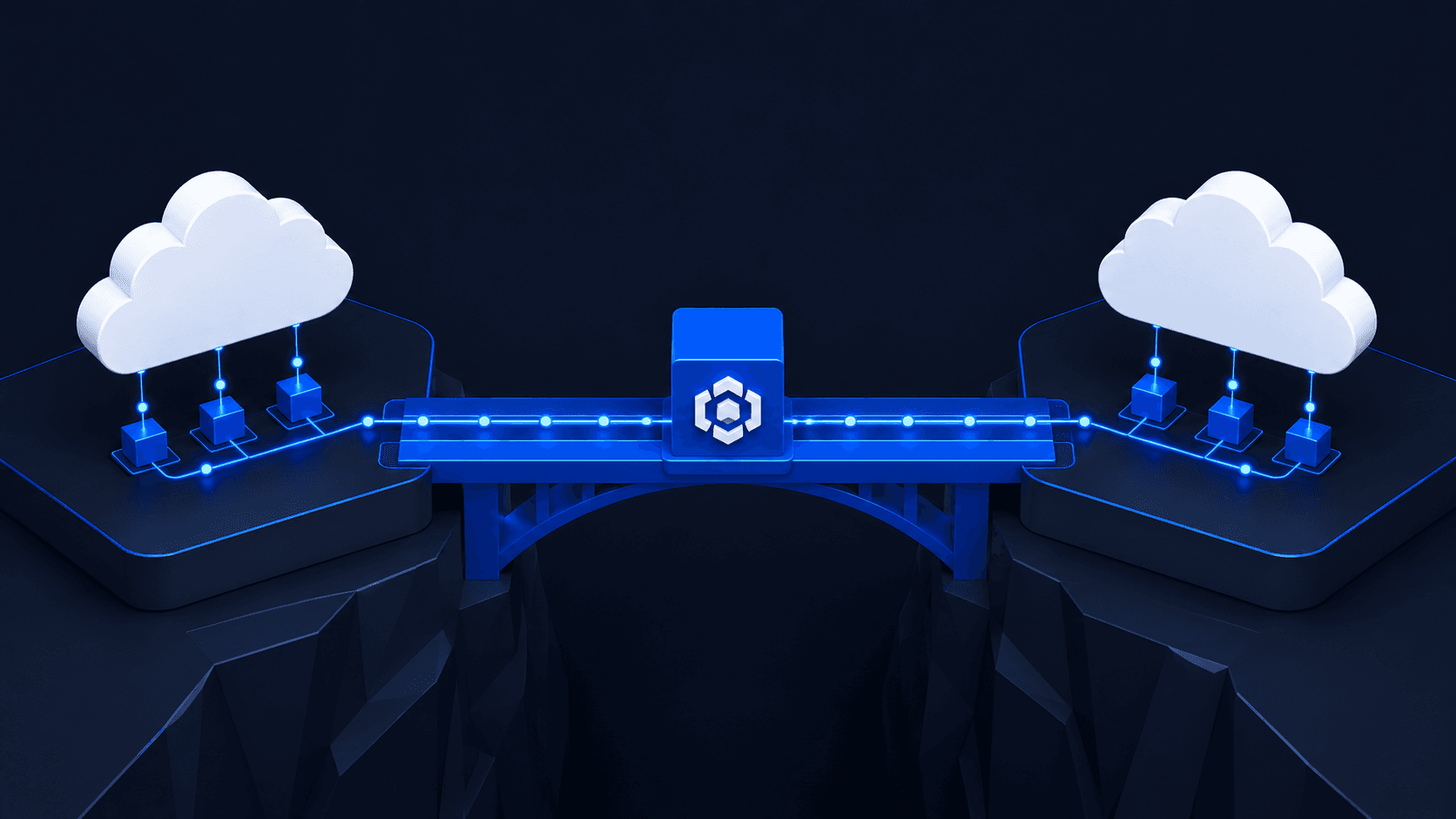
At Control Plane, we’ve spent the last few years building the bridge across this gap. Unlike cloud-native tools that optimize within silos, Control Plane treats infrastructure as a fluid system, across clouds, regions, and edge, by default. We’ve consolidated management, security, and observability into a single abstracted layer. We’re also enabling automatic workload failover across any cloud from one place. This allows organizations to move from a fragmented, siloed past to an autonomous future.
The results are quantifiable: organizations that embraced this unified platform approach saved an average of 30% of their engineers’ time and accelerated application development lifecycles by 20%.
In 2026, it’s time we learned how to run. The question is no longer “Which cloud should we use?” but “How quickly can we unify our operations into a single, abstracted pane of intent?”